Showing posts with label Lessons Learned. Show all posts

October 22, 2012

Choosing the Right Lens

Near the Utah Nevada border north of Wendover. This scene beckoned for a telephoto lens to compress the layers of desert mountains. Used a 70-200mm telephoto at 200mm. 
Choosing the proper lens for any photographic scene is an integral part of producing your vision as a photographer. Your lens choice can produce radically different images of the same scene. Wide angle lenses (ex. 16-35mm, 17-40mm, 18-55mm) tend to distort the image, making objects look stretched out and elongated; perfect for wide open landscapes, not so perfect for somebody's nose. Speaking of people's faces, if you're into portraits the best lens to accurately portray someone's face is 50mm. This focal length is the closest to how we see. If you put your camera, with the lens at 50mm, up to your eye and then take it down, the scene should look very similar. Cropped of course, but as far as distortion and size, it should be the same.* There are some amazingly priced 50mm prime lenses that give you fast glass at a classic focal length. My favorite being the Canon 50mm 1.8, sitting at a cool $107. I like to use anything 50mm+ when shooting portraits and will oftentimes use my telephoto 70-200mm lens with fantastic results. Telephoto lenses (70-200mm, 300mm) are great for compressing a scene and bringing foreground and background layers closer together. Seeing in telephoto may be a little difficult, and you can miss a potentially great shot if you're not used to it. Something I do often is put the camera to my eye and scan the scene with my telephoto lens in search of nice compositions. I may not always see those shots in the beginning, but I've been successful using this technique and I think it is a great way to practice "seeing" in telephoto.

 I like to have a vision going into a scene, but if something unexpected unfolds right in front of me I'm going to want to be able to make the most of it. This is where knowing your lenses, and how they capture a scene, will set you apart from the crowd and keep you coming home with an arsenal of images. 

Beautiful Ogden Valley at sunset. Using a wide angle lens allowed the fence in the foreground to lead the eye into the scene and wide open background. I used a 24mm tilt shift lens. 

*Of course, there is a difference when dealing with camera bodies that have crop sensors compared to full frame sensors. Some photographers prefer an 85mm lens on a full frame body for portraits, but the idea that the focal range between 50mm-85mm being similar to the eye is still applicable.
 

September 11, 2012

Canada: Trip Planning


I’m getting ready for an amazing trip up north to the Canadian Rockies! I’ll be gone for a total of 11 days, spending most of it exploring Banff and Jasper National Parks. I’ll be driving the whole way, most of it with a friend, until I say goodbye and she continues on to meet up with family. We will hopefully be able to squeeze in a bit of Glacier National Park on the way back, but we’ll have to play it by ear. I have always been enthralled by the Canadian Wilderness and now I will actually be able to see and photograph its grand beauty.

I love planning and preparing for a trip, but this one has just about done me in. I think I've been so concerned about making it absolutely perfect that I've forgotten about letting things happen as they will. That’s all part of the adventure after all. It’s always good to have a plan and be prepared, but leave a little leeway for exploration, the unexpected or, heaven forbid, when things go wrong. Like Yvon Chouinard, founder of Patagonia Clothing Company, said, “It’s not an adventure until something goes wrong.” I may not necessarily want things to go wrong, but there is something to that. There must be room to wiggle, to make last minute rash decisions. Planning is great. Don’t get me wrong. You can get more out of an “adventure” by wise planning, but there is something about living in the moment. Don’t be so stuck on an idea or plan that you forget where you are and experiencing it first hand. Sometimes I don’t recognize the beauty around me when I've had my mind set on a “picture” or an idea. Like my grandma and mom always say, “Don’t wish your life away” or in this case, don’t plan your life away. Soak in the goodness, keep an open mind and leave some room for when the adventure really begins.

I’m hoping to get one more post of my packing list in before I take off. We’ll see if I decide to bring the computer along...I might just be able to post along the way (pending wi-fi availability) and bring you along for the ride!


September 05, 2012

Rule #32 "Enjoy the Little Things"


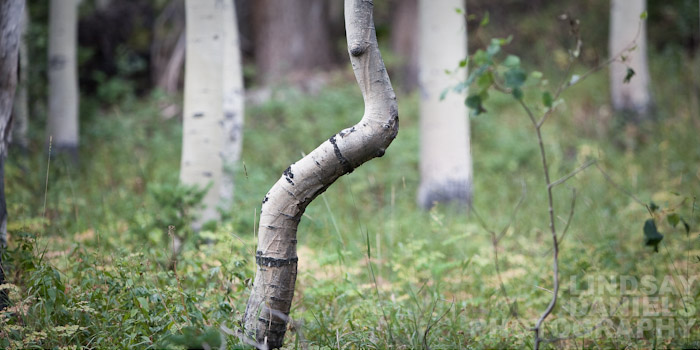
Sometimes we forget about the little things. We can be so focused on the grand scene that the details tend to be overlooked. To quote rule #32 from the movie Zombieland, "Enjoy the little things". The end goal may be the focus, but those little things can create an entire picture sometimes more powerful than the initial goal. At least this was my experience last week as I headed up Big Cottonwood Canyon. The end goal was sunset at one of the small lakes in the area. Something similar to the shots I was able to capture at Cecret Lake one canyon over. Maybe a yellow tree here or there, some dramatic storm clouds, but it just didn't happen. I worked the scene for what it was and still ended up coming up short. It was a beautiful night, but I wasn't able to capture my vision in the final scene. My images of the hike in, however, were able to sum it up beautifully. I didn't need to capture that grand sweeping vista to convey the beauty that evening. I often forget this "rule" and can get distracted by the grand landscape. I'm not saying the grand landscape isn't, well, grand, but it is important to keep your eyes and mind open to the details and "less grand" scenes, too. Sometimes you just need to stop and enjoy the little things.