Showing posts with label National Parks. Show all posts

January 08, 2013

Location: Bryce Canyon (Winter)

Inspiration Point at Sunset, Bryce Canyon National Park

After exhausting our options in the Grand Canyon, my friend, Beck, and I decided to head up to Bryce Canyon. I have been wanting to get back to Bryce since I had a micro short stay almost two years ago. Winter in Bryce creates a great contrast between the snow and red rock hoodoos, but it can come at a price. I thought the Grand Canyon was cold, but I had no idea how cold it could get in Bryce. At one point my iPhone weather app said -13 degrees F! Not much you can do before your mind and body become lethargic and wonder why the crap you're standing on the edge of a cliff in this insanely cold weather. Sometimes I got so enthralled in the photo taking that I forgot I should probably put my gloves back on or risk frost bite. The reality sets in after I've gotten back in the warm car and the feeling in my fingers and toes comes back with a vengeance. Bryce in the winter really is unbelievably beautiful. If you can fight the cold it is well worth a visit. 

Sunrise at Sunset Point, Bryce Canyon National Park

First light on Bryce Canyon's hoodoos in winter at Sunset Point.
Sunrise at Sunset Point, Bryce Canyon National Park
Swamp Canyon just after Sunset, Bryce Canyon National Park
Inspiration Point sunset panorama, Bryce Canyon National Park

Some tips for shooting in cold weather: 
  1. Batteries are the first thing to go when it's cold. Have a spare or two and keep them in a pocket with a hand warmer wrapped around it. I've even seen some photographers place a hand warmer on the outside of the camera and attach it with a rubber band. 
  2. Keep your hands warm. I struggle with this myself, mostly because I don't have the proper gear, but my hands are the first thing that get cold. I need my hands to work the small buttons on the camera, adjust the ball-head or focus the lens, but with thick gloves it can be awkward. Most of the time I just take a glove off to make a quick adjustment and fumble through the rest with my gloves on. A shutter release cable makes it easier to find the shutter button with gloves. Hand warmers are also good to keep in your pockets or stick inside the glove for that extra bit of warmth.
  3. Watch your breath. Condensation will build up on anything close to your airway and in freezing temperatures it will immediately turn to ice. Not so fun when your filters or front element of your lens gets covered in ice. I should also note that care should be taken when changing lenses in freezing temperature. I'm not always the best at keeping to this, but it's something to consider.
  4. Bundle up and layer. Come prepared to face the elements with the proper gear. A light jacket and sneakers aren't gonna cut it. And don't forget a beanie.
  5. Last but not least, have fun! Shooting in freezing temperatures is challenging, but there is a certain satisfaction that comes from enduring these conditions and coming away with lasting imagery. 

January 03, 2013

Location: Grand Canyon (Winter)

View of Bright Angel Canyon from Yavapai Point, Grand Canyon National Park.

It feels like forever since I've been on a proper road trip and the Grand Canyon has been calling my name for awhile. What better time to visit than the dead of winter? Besides the temperature swings ranging from -9 to 40 degrees Fahrenheit and the majority of the park being closed, it's a great time to visit. It really is beautiful this time of year, however, I think I'm going to choose a different time of year the next time I visit the GC. The South Rim Entrance is the only entrance open in the winter, leaving only a fraction of the park accessible by car. Getting off the beaten track is a bit difficult, but if you're adventurous enough, it is possible. The crowds at the lookout points near the visitor center (Mather and Yavapai Point) are uncomfortably crowded, but the harder-to-get-to points are rather peaceful. The Rim Trail provided incredible views of endless canyon walls and would be my number one suggestion when visiting in the winter. My favorite view points were Hopi Point and Powell Point, both along the Rim Trail. At either point we must have only run into five other people. 

Broken light on the canyon walls, Grand Canyon National Park.

Sunrise at Yavapai Point, Grand Canyon National Park.

Afternoon light on the canyon walls below, Grand Canyon National Park.

Sunset at Yaki Point, Grand Canyon National Park.

Sunset at Yaki point, Grand Canyon National Park.
The temperature dropped quickly during sunset shoots, so wearing the proper gear was essential. However, even the so called "essentials" weren't enough. The biting wind at the edge of the canyon can be unrelenting. Layers and determination can go a long way, though.

Hopi Point, Grand Canyon National Park.

Broken light on the canyon walls, Grand Canyon National Park.

Sunset at Yaki Point, Grand Canyon National Park.
Despite the cold and limited access, the Grand Canyon did not disappoint. With a little planning and a resilient spirit, visiting the Grand Canyon in the winter can be very rewarding. Regardless, I look forward to going back, winter or not.

Grand Canyon in the Winter (Dec 1-Feb 28):

  • The North Rim is closed during the winter. The South Rim is the only part of the park that is open to vehicles.  
  • Hermit Road is closed, even to the shuttle. Hiking along Rim Trail is the only way to access Powell Point, Hopi Point and beyond. The trail is slick, but flat and offers some of the better views of the area. If you venture from the path you may find a grave site for a Charles Brant, his wife Olga, and their pet dog: Razzle Dazzle. The quote alone is worth the visit: 
    • "In this place doubt is impossible. Else, why all these wonders, this surpassing beauty, this grandeur, this deep peace, this confident repose? No, here is the spirit of God. Here one must believe." -C.A. Brant.
  • The East Entrance is closed as well as the Desert View Drive road that heads east along the rim from the South Rim Entrance. 
  • Only access to Yaki Point is to take the shuttle or walk from Desert View Drive (unless you get lucky/gutsy and drive up to the point anyway without getting caught. Parking is pretty much non-existant, though).
  • Bring plenty of warm clothes. Even if it's pleasant during the day, the temperature will drop quickly. 
  • Think about purchasing some kind of traction device to slip over your shoes, such as this. My knee wishes I would've bought a pair.
  • The light can be pretty good all day with the sun so low in the sky, so get out there, explore and bring back some keepers.

October 04, 2012

Canada: Going Back Home


Self Portrait at Peyto Lake, Icefields Parkway, Canada

OK, OK, you're probably sick of hearing about my trip to Canada by now, but I promise, this will be my last Canada post for a while. 

The last bit of my trip was both depressing and exciting: Depressing because the freedom of my solo flight was coming to an end, and exciting because I was getting closer to meeting up with and being able to share my experiences with my best friend. I was at Peyto Lake hiking up above the tree line to catch the first bit of light on the mountains when it hit me, I was on the tail end of my trip and it was actually going to end. During the past few days I had lost track of time, living in a sort of virtual reality. My life consisted of sunrise, hike, nap, hike, sunset, edit, sleep, and it seemed I would be doing it forever.

Peyto Lake, Icefields Parkway, Canada

Remnants of Athabasca Glacier, Icefields Parkway, Canada

I made my way through the Icefields and into Jasper stopping at places like Athabasca Glacier and Athabasca Falls. The once amazing Athabasca Glacier is quickly receding and will be all but gone in the next few decades. All along the trail there are signs marking where the "toe" of the glacier sat in past years. It was startling to realize how far it has receded in just my lifetime.

Mountain Peaks Near the Athabasca Glacier, Icefields Parkway, Canada

Photographing the Athabasca Glacier, Icefields Parkway, Canada

Inuksuk Overlooking the Athabasca Glacier, Icefields Parkway, Canada

The Athabasca Glacier in 2000, Icefields Parkway, Canada

Elk in the Athabasca River, Jasper National Park, Canada

I sat at my campground picnic table, showered, sipping natural evergreen mint tea, listening to wild elk calls, and I couldn't help but think how lucky and blessed I was to be able to have such an awesome opportunity to come to the Canadian wilderness and experience such beauty. I thought back on my first day and how I was a bit unsettled as if I had just been dropped off in the middle of nowhere and had to find my way out...OK, maybe I was. My confidence grew as I orientated myself and became more and more focused on my photography. By the end of the trip I felt like I knew the ins and outs of the area: Where to sleep without being disturbed, what to keep an eye out for while hiking, and how the light would fall in certain locations. 

Athabasca Falls, Jasper National Park, Canada

Athabasca Falls Detail, Jasper National Park, Canada

The Highest Peak in the Canadian Rockies, Mt. Robson, British Columbia, Canada

After meeting up, my friend and I made our way back down past the border and into Glacier National Park. If we had known it was going to be so smoky we may have stayed longer in the Canadian parks. The pine beetle and fire laden trees just added to the apocalyptic scene. It took a bit of venturing off to find the beauty, but it was still there to be found. Glacier will definitely be on the list of places to come back, hopefully in better conditions, and fully enjoy the park's beauty.

Running Eagle Falls, Glacier National Park

Hidden Lake Nature Trail Sunrise, Glacier National Park

Hidden Lake Nature Trail Sunrise 2, Glacier National Park

McDonald Falls Detail, Glacier National Park

I couldn't have hoped for a better first time in Canada. It was a fantastic opportunity and I hope to have several more just like it. I've got a feeling I will be back in Canada sooner rather than later...

October 01, 2012

Canada: Lake Louise and into the Icefields

Lake Louise at Sunrise, Banff National Park, Canada

Lake Louise is one of the most famous locations in the Canadian Rockies. I don't think I have been to a sunrise location with so many people! Mesa Arch has some competition! Despite the amount of flash happy tourists, the scenery did not disappoint. I took a late morning hike up to Lake Agnes and really wished I had time to come back for some better lighting. Unfortunately, I had to keep going. 

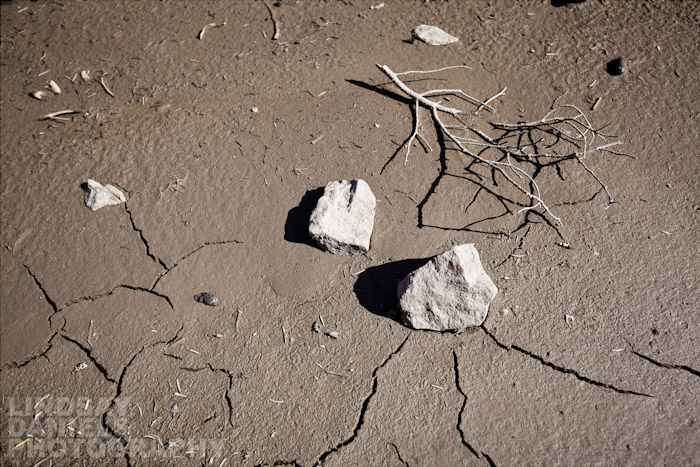
Cracked Mud Near Mirror Lake, Banff National Park, Canada

Moraine Lake is possibly the second most famous location in the Canadian Rockies and for good reason. I was able to shoot both sunset and sunrise at Moraine Lake, surprisingly, with only a handful of people on either end. My plans of trying to make it to Consolation Lakes for sunset had been squashed by the "rule of 4" stating that a minimum of four hikers must stay within site of each other or be fined up to $5,000. The rule is in place because of the amount of bears in the region. I hung around the trail head waiting for three willing suckers, but most of those I tried to convince were put off by the mere possibility of bears and the fact that it would be dark on our return. I have to say, it took all of my self preservation not to take the chance and go anyway. Clouds were hanging around the peaks near Moraine Lake (which was right next to the trail head for Consolation Lakes) so I figured I'd play by the rules and stay at the more populated area for sunset. The possibility of a $5,000 fine didn't seem too appealing anyway. Moraine Lake is known as a sunrise spot, since the sun hits the peaks at first light, but with the clouds that night it turned out to be an excellent sunset spot as well. 

Sunset at Moraine Lake, Banff National Park, Canada

Tower of Babel at Sunset, Banff National Park, Canada

Pine and Sky, Banff National Park, Canada

Sunrise at Moraine Lake, Banff National Park, Canada

After a successful sunrise shoot at Moraine Lake, I headed into the Icefields which are between Banff and Jasper National Parks and consists of several (dying) glaciers. This point of the trip was perhaps my favorite. I had the most freedom and solitude here. There was a lot of time to explore and I was able to find some really cool spots. One spot in particular I ended up renaming, "My Lake". 

Layers of Mountains, Icefields Parkway, Canada

Taking a Moment to Read at "My Lake", Icefields Parkway, Canada

The Flow into Mistaya Canyon, Icefields Parkway, Canada

Mistaya Canyon, Icefields Parkway, Canada

I found a beat up, duct taped together, aluminum canoe at "My Lake" and used it as both an office and a prop. I came back for sunset and enjoyed one of my favorite light shows of the trip. Every direction offered incredible color and I was ecstatic and grateful to be in such a picturesque location with such amazing light.

"My Lake" at Sunset, Icefields Parkway, Canada

September 28, 2012

Canada: Lower Half of Banff

I have made it back from Canada, safe and sound. I had such an amazing time I feel that trying to describe my feelings about it only fall short. My journey has only made me want to return and expand my reach northward. I'm trying to figure out how to swing a trip this winter, but we'll see if it actually works out. I'm going to break my posts up into sections of the park(s), starting with the lower half of Banff National Park; from Johnson Lake to Castle Mountain and everything in between. 

Johnson Lake was my first stop and where I hung out most of my first day. The sunset was one of the bests of the trip. I mentioned in one of my previous posts that I had been running between a few spots to get the most out of this sunset, but that was the case for most of my days in Canada. It was a great starting point and really got me excited for what was to come.

Johnson Lake at Sunset, Banff National Park, Canada.
Kayakers on Johnson Lake, Banff National Park, Canada
Clouds over Mount Rundle, Banff National Park, Canada

On Sunday, I spent the entire day at Vermillion Lakes. It was nice and peaceful, but this was one of my longest days. I decided to stay out late and try for a night shot composite, which required standing in the same location from dusk until dark. I'm still working on the composite, but I will post it here when I finish (that is, of course, if it works out). The one thing I would strongly suggest for this location is some good hunting boots. There is no way I could have gotten the shots I did without my L.L. Bean hunting boots. This area is marshy and swampy, so if you're looking to shoot here, bring some boots that can get muddy and wet. 
This is also a great place for bird watching, which I was hoping to do during the day. I stalked a blue heron for a large part of the day without much success. It was camera shy to say the least and I was definitely wishing I had a 500 mm lens at that point. 

Mount Rundle at the Second and First Vermillion Lakes, Banff National Park, Canada
Second Vermillion Lake at Sunrise, Banff National Park, Canada

I spent the night at Two Jack Lake campground (which ended up being the last night before it closed for the winter) and took advantage of a nearby sunrise location. Cascade Mountain and Mount Rundle compete for attention in this part of the park and both are equally picturesque. The morning I was to photograph these two in Two Jack Lake I slept through my first alarm. Luckily, I got up, threw some pants and boots on and rushed out to get some of the first light on Cascade Mountain. I hadn't really scouted out the area, so I rushed to where it looked like I'd get views of Cascade Mountain. Most of the views were obscured by the trees and the bend of the shore, so I made the rash decision to wade out into the lake. I took my boots off, hiked up my pants and ended up waded in up to my waist. The views were better, but my motor skills were slowing down, so I figured I should get out of the freezing water and get my blood flowing again. 

Cascade Mountain at Two Jack Lake and Hillsdale Meadows in Fall, Banff National Park, Canada

My next adventure was heading through the Bow Valley Parkway to Castle Mountain and hitting the more unassuming spots along the way. One of my favorite parts of this stretch was the elk scarring on the trees. The dark parts of the trees are uniform throughout these forests. I was having a hard time conveying the uniformity and unique nature of the trees until I got closer and found the way the light was hitting the scars and the different designs in them created graphic images. I was really happy about the way they turned out.  

Elk scars, Banff National Park, Canada
Hillsdale Meadow in Fall, Banff National Park, Canada
Johnston Canyon Lower Waterfall, Banff National Park, Canada

Castle Mountain is a great area for some classic Canadian Rockies imagery. There is a gate near the bridge that allows you to access the river. It looks locked at first, but it's there to keep the animals off the highways. There were some other photographers on the north side of the bridge, but I wanted to have the bridge a part of my picture. I crossed underneath the bridge and quickly realized why most of the other photographers had stayed on that side. There was a part of the river that branched off and forced you to wade through to get to the other side. I figured I had waded through freezing water once today, what's it gonna hurt to do it again? I was glad I did because I was happy with the results, and I was able to enjoy the scenery all to myself.

Castle Mountain and Castle Mountain Bridge at Sunset, Banff National Park, Canada
Self Portrait on the Bow River, Banff National Park, Canada