Showing posts with label Sunrise. Show all posts

October 01, 2012

Canada: Lake Louise and into the Icefields

Lake Louise at Sunrise, Banff National Park, Canada

Lake Louise is one of the most famous locations in the Canadian Rockies. I don't think I have been to a sunrise location with so many people! Mesa Arch has some competition! Despite the amount of flash happy tourists, the scenery did not disappoint. I took a late morning hike up to Lake Agnes and really wished I had time to come back for some better lighting. Unfortunately, I had to keep going. 

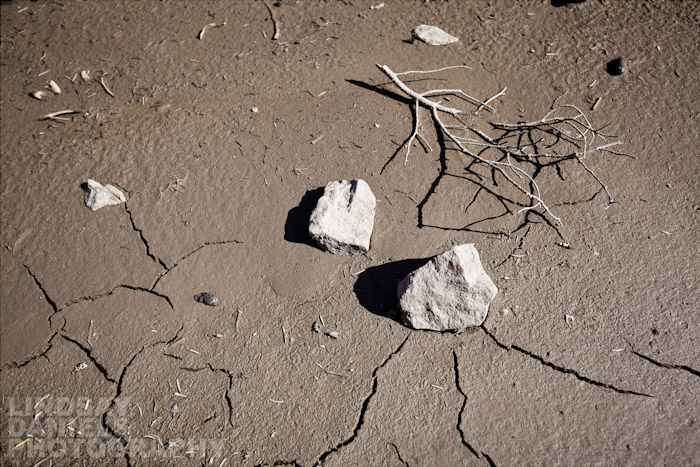
Cracked Mud Near Mirror Lake, Banff National Park, Canada

Moraine Lake is possibly the second most famous location in the Canadian Rockies and for good reason. I was able to shoot both sunset and sunrise at Moraine Lake, surprisingly, with only a handful of people on either end. My plans of trying to make it to Consolation Lakes for sunset had been squashed by the "rule of 4" stating that a minimum of four hikers must stay within site of each other or be fined up to $5,000. The rule is in place because of the amount of bears in the region. I hung around the trail head waiting for three willing suckers, but most of those I tried to convince were put off by the mere possibility of bears and the fact that it would be dark on our return. I have to say, it took all of my self preservation not to take the chance and go anyway. Clouds were hanging around the peaks near Moraine Lake (which was right next to the trail head for Consolation Lakes) so I figured I'd play by the rules and stay at the more populated area for sunset. The possibility of a $5,000 fine didn't seem too appealing anyway. Moraine Lake is known as a sunrise spot, since the sun hits the peaks at first light, but with the clouds that night it turned out to be an excellent sunset spot as well. 

Sunset at Moraine Lake, Banff National Park, Canada

Tower of Babel at Sunset, Banff National Park, Canada

Pine and Sky, Banff National Park, Canada

Sunrise at Moraine Lake, Banff National Park, Canada

After a successful sunrise shoot at Moraine Lake, I headed into the Icefields which are between Banff and Jasper National Parks and consists of several (dying) glaciers. This point of the trip was perhaps my favorite. I had the most freedom and solitude here. There was a lot of time to explore and I was able to find some really cool spots. One spot in particular I ended up renaming, "My Lake". 

Layers of Mountains, Icefields Parkway, Canada

Taking a Moment to Read at "My Lake", Icefields Parkway, Canada

The Flow into Mistaya Canyon, Icefields Parkway, Canada

Mistaya Canyon, Icefields Parkway, Canada

I found a beat up, duct taped together, aluminum canoe at "My Lake" and used it as both an office and a prop. I came back for sunset and enjoyed one of my favorite light shows of the trip. Every direction offered incredible color and I was ecstatic and grateful to be in such a picturesque location with such amazing light.

"My Lake" at Sunset, Icefields Parkway, Canada

September 28, 2012

Canada: Lower Half of Banff

I have made it back from Canada, safe and sound. I had such an amazing time I feel that trying to describe my feelings about it only fall short. My journey has only made me want to return and expand my reach northward. I'm trying to figure out how to swing a trip this winter, but we'll see if it actually works out. I'm going to break my posts up into sections of the park(s), starting with the lower half of Banff National Park; from Johnson Lake to Castle Mountain and everything in between. 

Johnson Lake was my first stop and where I hung out most of my first day. The sunset was one of the bests of the trip. I mentioned in one of my previous posts that I had been running between a few spots to get the most out of this sunset, but that was the case for most of my days in Canada. It was a great starting point and really got me excited for what was to come.

Johnson Lake at Sunset, Banff National Park, Canada.
Kayakers on Johnson Lake, Banff National Park, Canada
Clouds over Mount Rundle, Banff National Park, Canada

On Sunday, I spent the entire day at Vermillion Lakes. It was nice and peaceful, but this was one of my longest days. I decided to stay out late and try for a night shot composite, which required standing in the same location from dusk until dark. I'm still working on the composite, but I will post it here when I finish (that is, of course, if it works out). The one thing I would strongly suggest for this location is some good hunting boots. There is no way I could have gotten the shots I did without my L.L. Bean hunting boots. This area is marshy and swampy, so if you're looking to shoot here, bring some boots that can get muddy and wet. 
This is also a great place for bird watching, which I was hoping to do during the day. I stalked a blue heron for a large part of the day without much success. It was camera shy to say the least and I was definitely wishing I had a 500 mm lens at that point. 

Mount Rundle at the Second and First Vermillion Lakes, Banff National Park, Canada
Second Vermillion Lake at Sunrise, Banff National Park, Canada

I spent the night at Two Jack Lake campground (which ended up being the last night before it closed for the winter) and took advantage of a nearby sunrise location. Cascade Mountain and Mount Rundle compete for attention in this part of the park and both are equally picturesque. The morning I was to photograph these two in Two Jack Lake I slept through my first alarm. Luckily, I got up, threw some pants and boots on and rushed out to get some of the first light on Cascade Mountain. I hadn't really scouted out the area, so I rushed to where it looked like I'd get views of Cascade Mountain. Most of the views were obscured by the trees and the bend of the shore, so I made the rash decision to wade out into the lake. I took my boots off, hiked up my pants and ended up waded in up to my waist. The views were better, but my motor skills were slowing down, so I figured I should get out of the freezing water and get my blood flowing again. 

Cascade Mountain at Two Jack Lake and Hillsdale Meadows in Fall, Banff National Park, Canada

My next adventure was heading through the Bow Valley Parkway to Castle Mountain and hitting the more unassuming spots along the way. One of my favorite parts of this stretch was the elk scarring on the trees. The dark parts of the trees are uniform throughout these forests. I was having a hard time conveying the uniformity and unique nature of the trees until I got closer and found the way the light was hitting the scars and the different designs in them created graphic images. I was really happy about the way they turned out.  

Elk scars, Banff National Park, Canada
Hillsdale Meadow in Fall, Banff National Park, Canada
Johnston Canyon Lower Waterfall, Banff National Park, Canada

Castle Mountain is a great area for some classic Canadian Rockies imagery. There is a gate near the bridge that allows you to access the river. It looks locked at first, but it's there to keep the animals off the highways. There were some other photographers on the north side of the bridge, but I wanted to have the bridge a part of my picture. I crossed underneath the bridge and quickly realized why most of the other photographers had stayed on that side. There was a part of the river that branched off and forced you to wade through to get to the other side. I figured I had waded through freezing water once today, what's it gonna hurt to do it again? I was glad I did because I was happy with the results, and I was able to enjoy the scenery all to myself.

Castle Mountain and Castle Mountain Bridge at Sunset, Banff National Park, Canada
Self Portrait on the Bow River, Banff National Park, Canada

September 18, 2012

Canada: Post Card

Mount Rundle reflected in Two Jack Lake in Banff National Park

Hello again from Canada! I've been pretty busy shooting away the last few days I've hardly put my camera down. It was a long night full of what I swear sounded like elks having epic battles, but I was able to get to Lake Louis to capture it's beauty before sunrise. More of that to come..

May 31, 2012

Location: Caineville, Utah

Boy, has it been a busy couple of months! I've finally made some edits from my latest trip down south, to Caineville, Goblin Valley and Torrey, Utah. This was all new territory for me, so I did my best to take it all in. I had seen photographs of the buttes in Caineville, Utah (thank you Adam Barker) and have wanted to photograph the place ever since. I was hoping for the spring wildflowers, but with the dry winter, it was not to be. Regardless, the buttes in Caineville did not disappoint. The light on the hills, from shadow to full sun, created depth and contrast that would entice any photographer. Lines that off-road vehicles have left on the Mars-like landscape lead the eye to distant buttes and layers of mystical formations. Despite the lack of wildflowers, the early morning light and array of grey hues made for some interesting photographs. This is a place I will definitely come back to. If not only to photograph, but to do some off-roading as well!


P.S. I'm working on my website and it should be up and running within a week. I'm working on a whole new look that I'm pretty excited about it.

May 07, 2012

Location: Canyonlands NP

Pothole Point Overlook. Needles District, Canyonlands.  
Singh-Ray 3-stop reverse ND, 2-stop soft step graduated ND, Singh-Ray Warming Polarizer, Canon 5D Mark II, Canon 70-200mm, Gitzo Tripod, BH-3 Ballhead.

False Kiva. Island in the Sky District, Canyonlands.
Singh-Ray 3-stop reverse ND, 2-stop soft step graduated ND, Singh-Ray Warming Polarizer, Canon 5D Mark II, Canon 17-40mm, Gitzo Tripod, BH-3 Ballhead.

Pothole Point Overlook.  Needles District, Canyonlands.  
Singh-Ray 3-stop reverse, Singh-Ray Warming Polarizer, Canon 5D Mark II, Canon 70-200mm, Gitzo Tripod, BH-3 Ballhead.


 Newspaper Rock. On the way to the Needles District, Canyonlands.
Canon 5D Mark II, Canon 17-40mm.


I've been hitting up several National Parks in and around Utah this past year and have come to fall in love with Canyonlands National Park. Just west of the well known Arches National Park, on the other side of Moab, lies the beautiful Canyonlands National Park. The north entrance, just north of the entrance for Arches, takes you to the Island in the Sky District. At the edges of "Island in the Sky" you realize why it has its name; steep cliffs drop off into the canyon floor hundreds of feet below which continue miles beyond human sight. The Green and Colorado Rivers have formed much of the land, carving deeper canyons below. With the limited time I've had in the Island in the Sky District, and Canyonlands in general, I've only been able to hit some of the shorter hikes and closer lookouts. For a one or two day trip to Canyonlands, I would suggest staying in the Island in the Sky District and hitting the sites there.  These are some of my favorites:


  • Mesa Arch is one of the most famous arches in the area and is best seen at sunrise. There will be 20-30 other people there, especially in the spring and summer months, so get there early if you want to set your tripod somewhere decent. Or you can always hope for an overly friendly European who will wave you over to set your tripod leg to leg with his, in the midst of a sea of Japanese tourists, to get the exact shot you were hoping for. But I wouldn't count on it. Get there early if you don't want to be fighting for your view of Mesa Arch. 


  • False Kiva is one of the best kept secrets in the park. The trail is unmarked and followed only by the occasional cairn, but if you ask a ranger at the visitor center, they'll tell you exactly where to go. It is a very secluded hike. Chances are, you won't see another person the entire way. Keep that in mind, and be prepared, if you plan on going alone.  


  • Any of the overlooks are amazing; I would suggest hitting as many as you can and choosing Green River Overlook or Grand View Point Overlook for sunset.  


For the majority of my most recent trip, I spent my time in, or getting to, the Needles District. None of the four districts in Canyonlands connect, and you have to drive out the same way you come in, so accessibility is not exactly easy. The road to get to the Needles District is north of Monticello, and from the 191 it's a scenic 35 mile drive in. The places I was able to see only made me disappointed that I didn't have more time to explore. This part of the park definitely requires pre-planning. Backcountry permits go quickly and can only be reserved if you call at least two weeks ahead. Very few are given out on a first come, first serve basis at the visitor center, and they start giving them out a day prior to the backcountry day.  I know the next time I go to the Needles I will have a backcountry permit in hand. It seems to me, the only way to really experience the Needles District is to spend a night or two in the secluded backcountry. Maybe in the next few months...


Elephant Hill Trail. Needles District, Canyonlands.
Singh-Ray Warming Polarizer, Canon 5D Mark II, Canon 17-40mm.

Pothole Point. Needles District, Canyonlands.
Canon 5D Mark II, Canon 17-40mm, Gitzo Tripod, BH-3 Ballhead.

Cave Spring pictographs. Needles District, Canyonlands.
Canon 5D Mark II, Canon 17-40mm.

Layers of sandstone on Elephant Hill. Needles District, Canyonlands.
 Singh-Ray Warming Polarizer, Canon 5D Mark II, Canon 17-40mm.

Needles District, Canyonlands.
 Singh-Ray Warming Polarizer, Canon 5D Mark II, Canon 70-200mm.

Mesa Arch. Island in the Sky District, Canyonlands.
Canon 1Ds Mark II, Canon 17-40mm, Tripod.


May 04, 2012

Spirit of America: Canyonlands


To continue my 'Spirit of America' series I've included this shot of Mesa Arch at sunrise. Canyonlands National Park is the ultimate American Southwest landscape, with arches, deep canyons, red rock, and sweeping landscapes that stretch for miles. This is what I imagine when I think about the American spirit.


*Prints available upon request. See 'Prints' tab.

April 11, 2012

Moonset


One of my first landscape shots with the Canon 5D Mark II.  Moonset over the Oquirrh Mountains.  

January 29, 2012

Day Full of Photography


I love the days that begin and end with photography.  Yesterday was one of those days.  I got up extra early to make it to Park City before sunrise.  In such a photogenic setting and just off the main road, the Park City barn has been photographed more than a few times.  I was hoping for some unique light so I could come away with something different.  
I like to think of the photo canvas as split up into thirds.  Not only two dimensionally, but three dimensionally as well.  I know, a photograph is only two dimensional, but hear me out.  To create an image with real depth and visual interest, the photographer must make it seem three dimensional.  How do you do that with a medium that is obviously two dimensional?  Fake it.  Use leading lines, create layers, get a different perspective.  Every photo I take, I want it to feel like you are there.  Or to feel like you want to go there.  Which is why I try to create depth in every photograph.  Now, back to the photograph being split up into thirds.  The rule of thirds is an elementary rule in photography and essentially places your main subject in a more pleasing location other than just smack in the middle.*  The rule of thirds is basically this; split your image into thirds and place the main subject or horizon lines in the intersecting thirds.  This is a great rule and should be second nature to any photographer, but what if we took it to the next step?  What if the photo was actually a cube?  If you split your image’s depth into thirds what do you get?  A foreground, a middle-ground and a background.  Placing visually interesting objects in these thirds will create depth, and how you place them will either make it interesting or distracting.  The idea of creating a cube instead of a flat plane will improve your photography tenfold.  Now, It’s up to you in how you place objects within this cube. 
In my photo below, the cattails are my foreground and out of focus for a reason as I don’t want them to distract from the main subject, the middle-ground, the barn, is my main focus, and the mountains are my background.  With an aperture of 2.8 I wanted the focus to stay on the barn and kind of soften every other layer in the photo (ie. the mountains and the cattails).  I used my 70-200mm lens to compress the landscape a bit and make it feel like the mountains were right up against the barn.  


Back in Salt Lake I was able to catch sunset in the city.  I went up to a favorite location of mine to take photos of the City Council Building.  I try to pre-visualize what kind of photos I want to take in certain locations and I certainly had some ideas of what I was looking for here.  The sky was working again for me and I was able to come away with the images I’ve had in my head.  Gotta love a day full of successful photography! 

*This rule, and every other rule for that matter, is really only a guideline (as Captain Barbossa would say).  So, learn the rules and then learn how and when to break them.

December 10, 2011

Lunar Eclipse


My alarm woke me at 5:30 am this morning and I had to wonder, 'Why in the world is my alarm going off on a Saturday?!'  Then I realized, I had done this to myself.  It's a funny thing what I'm willing to do for photography.  There was a lunar eclipse this morning and Salt Lake City got a pretty great show.  I couldn't have asked for any better conditions:  Clear skies, a setting moon, and a sunrise to light the foreground, not to mention a perfect scene from a nearby park.  Besides my toes being so cold they were going numb, it was an amazing morning.  

September 27, 2011

Southwestern Adventure: Monument Valley

Mittens View is by far the most recognized if not most photographed part of Monument Valley.  I enjoyed the 17 mile off-road loop, but didn’t get anything that jumped out at me photographically.  So I stuck to the Mittens View photographing from the base to the overlook. My campsite even overlooked the Mittens, which was very convenient for both night and sunrise shots.  My time at Monument Valley was mostly relaxing as most of the wonder was right in front of me.  There were areas I wanted to explore, but were restricted and only allowed if accompanied by a well paid guide.  Even though I was photographing essentially the same scene over and over I wanted to make each take unique.  Different light, different angle, different focal length, different eye.  The shooting never stopped.  Even when I was running back down the sandy hill I just hiked up to retrieve my forgotten tripod, I was taking pictures.  Light changes, your eye can catch a view differently and things can come together at a moment’s notice.  The key is to be ready for that moment and have the patience to wait to capture it. 


Tomorrow:  Antelope Canyon